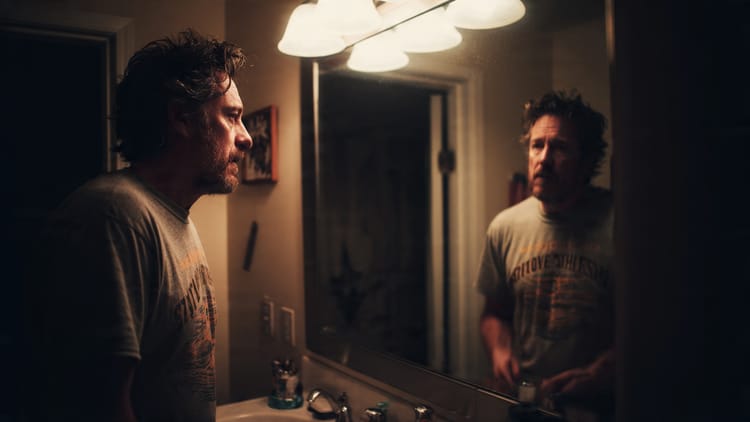
The Smell of Memories

The first smell didn’t match the room.
It arrived in the middle of a February staff meeting, in a glass office that reeked of burnt coffee, hand sanitizer, and the kind of carpet cleaner every corporate building in America seems to use. What she smelled was warm bread and cinnamon sugar, the exact scent of the cinnamon rolls her grandmother used to bake in a tiny Ohio kitchen in 1997.
There was no bakery on that floor. No one else smelled a thing.
THE SCENT THAT SHOULDN’T EXIST
At first she thought it was nostalgia playing tricks on her.
Thirties, overworked, living on cold brew and Slack pings, she assumed her brain was just trying to self soothe with a memory. But the smells kept coming, and they stopped caring about context.
On the Garden State Parkway, stuck in traffic behind a line of SUVs, she suddenly smelled her grandfather’s aftershave
that cheap, sharp drugstore cologne he used to splash on before church. Her eyes filled. The car in front of her honked. She wiped her face and rolled down the window. Fresh air. Exhaust. Wet asphalt. The aftershave stayed.
At Costco on a Saturday, with samples of vegan nuggets and keto bars on folding tables, she was hit with the smell of chlorine and hot pavement
the community pool where she spent childhood summers. No one around her was wet. No one had just come from a pool. It was February in New Jersey.
She checked the dates on the yogurt, the meat, her deodorant, convincing herself it had to be something in the air. It wasn’t.
WHEN MEMORIES TURNED PREDICTABLE
The pattern crept up on her.
The smells weren’t random. Each one was attached to a very specific memory: the cinnamon rolls, the aftershave, the chlorine, the rubber and popcorn scent of an old movie theater back home. They came as complete scenes, packed into a single, hyper real odor that no one else perceived.
Then something shifted.
The smells started arriving in waves, seconds before a familiar wrongness washed through her.
A rising in the stomach. A brief, electric fear. A moment where the world felt slightly tilted, like the grocery store or office corridor had been nudged a few degrees to the side. Her husband said she would look “checked out” for 20 or 30 seconds, blinking slowly, hand frozen halfway to her coffee or her phone.
When the wave passed, the smell vanished. The memory it had dragged up receded with it, like a tide going out.
“I feel like my brain is spraying old childhood scents as a warning,” she said once, half joking. “Like an air freshener from hell.”
WHAT GOOGLE SAID IT WAS
Like everyone else in 2026, she checked the internet before she checked in with a doctor.
Type “phantom smells” into a search bar from a couch in suburban New Jersey and the list is messy: sinus infections, lingering post Covid damage, migraine aura, Parkinson’s disease, strokes, brain tumors, schizophrenia, doom.
Add “smell from childhood that no one else smells” and you get stranger results: threads about visitations from dead relatives, angels, “messages,” people convinced a specific perfume means a lost loved one is nearby. Whole communities trading stories about cigarette smoke with no source, roses in empty rooms, cookies in houses with no ovens.
She didn’t like how much those stories sounded like hers.
Her ENT ruled out the obvious: no big polyps, no raging sinus disease, no obvious structural block. Nasal endoscopy. Normal. Smell testing showed she could detect and identify real odors just fine. This wasn’t a lost sense of smell. It was added smells.
The ENT wrote “phantosmia, etiology unclear” and referred her to neurology.
WHAT THE BRAIN KNOWS THAT THE NOSE DOESN’T
In clinic, away from the fluorescent lights of her office and the smell of someone else’s lunch in the communal microwave, her story changed shape.
The smells were brief. Stereotyped. Tied to a rising feeling, a flicker of fear, a transient blankness she couldn’t quite describe. They were not random whiffs during the day. They were anchors in episodes that sounded suspiciously like something else.
“Have you ever had déjà vu that felt too strong?” I asked.
She nodded slowly.
“Sometimes it feels like I’ve lived the next ten seconds already,” she said. “Usually right after the smell hits.”
Temporal lobe epilepsy has a whole vocabulary of subtle, easily missed warning signs: auras that are really small focal aware seizures. Rising epigastric sensations. Déjà vu or jamais vu. Sudden fear for no reason. Unusual tastes. And, in a small but important slice of people, olfactory hallucinations
smells with no source, often described as smoke, burning, chemicals, or something intensely personal.
Her brain wasn’t just replaying memories. It was firing abnormal signals in the networks where smell, memory, and emotion intersect.
OFF THE SCAN, ON THE SCREEN
Her MRI was unremarkable to the untrained eye.
No large tumors. No glaring strokes. No obvious structural disaster. If anything, there were subtle changes in the medial temporal region that could be shrugged off as “probably nothing.” Enough to argue about at a conference. Not enough to blame without more.
EEG, however, was less subtle.
During prolonged monitoring, she had one of her “smell waves” while staring at her phone, scrolling through yet another story about grocery inflation and hospital billing reforms. She paused, nose wrinkling.
“Pool,” she said. “It smells like the pool again.”
On the screen above, temporal lobe electrodes on one side lit up with a burst of rhythmic activity that did not belong in a resting brain. A brief focal seizure. No convulsions, no falls to the floor, just a private fireworks show in the cortex that handles smell, memory, and the feeling of familiarity.
“I didn’t go anywhere,” she said afterwards. “I was still here. It just felt… layered. Like the hospital room and the pool were stacked on top of each other for a second.”
That was the moment the algorithm of her life swapped “mystical” for “electrical.”
WHAT WE CALLED IT
There are many ways to say it, but we chose the clearest.
Focal epilepsy arising from the temporal lobe, with olfactory auras.
Brief seizures where abnormal firing in mesial temporal structures produces a smell that isn’t there, often tied to emotionally charged memories. In some syndromes, like transient epileptic amnesia, these olfactory hallucinations travel with memory gaps and lingering smell distortions, making people doubt their sanity long before anyone checks their EEG.
“It’s not your grandmother visiting,” I told her gently. “It’s your hippocampus and olfactory cortex misfiring together. Your brain is the only candle in the room.”
She laughed once, sharp and relieved.
“So I’m haunted by my own limbic system,” she said. “That tracks.”
WHAT IT MEANT FOR HER LIFE
Epilepsy in 2026 in New Jersey doesn’t always mean dramatic convulsions on the subway.
It can mean small, private glitches that no one sees
moments in a Target aisle where someone smells their childhood kitchen, pauses, and then keeps walking. It can mean eight second blackouts you mistake for “spacing out” in a Zoom meeting. It can mean driving on I 287 and suddenly feeling like you’ve been on that exact curve with that exact song before, because abnormal firing is forcing your hippocampus to mislabel the present as a rerun.
For her, it meant medication.
Anti seizure drugs aimed at calming those temporal networks, reducing the frequency of the olfactory auras and the risk of larger, more disruptive seizures. Lifestyle adjustments that feel old fashioned
sleep, regular meals, not letting stress run uncorrected for months
but still matter when you are trying to keep neurons from tipping over the edge.
It also meant conversations about driving
state laws that don’t care how “small” your seizures are when it comes to putting you behind the wheel. HR meetings about flexible work. Quiet planning with her husband about what to do if an aura hits in the middle of a Trader Joe’s run.
The smells changed with treatment.
They didn’t vanish entirely. They got softer, rarer. Sometimes she’d catch a faint hint of chlorine while folding laundry and check the time, her own early warning system.
“I don’t hate them as much now,” she said once in follow up. “They’re still creepy. But they’re also proof that something real is happening in my brain. It’s not a sign from the universe. It’s a side channel.”
Her ghosts never walked or spoke they arrived as perfect, impossible scents from a childhood kitchen, every one of them written in the same patch of temporal lobe that refused to stay quiet.
Soren Whitlock