The Voice That Spoke Math

They noticed it first in the drive‑thru line.
He pulled up to the speaker at a McDonald’s off I‑95, the usual Sunday afternoon traffic curling around the building, and rolled down his window to order. Instead of “Quarter Pounder meal, no pickles,” what came out of his mouth was:
“Forty seven… twelve… six point three… repeat.”
The kid on the headset stared at him through the smudged glass. His wife reached over, touched his arm, and said his name. He tried again. More numbers. Same flat tone. Same blank confusion in his own eyes.
He could hear himself. He just couldn’t stop it.
And none of the numbers meant anything to him.
OUT OF NOWHERE
He was forty eight, a project manager who lived in spreadsheets but still needed his phone to tip at Applebee’s.
No history of seizures. No psych diagnoses. Just the usual American collection of borderline blood pressure, too many emails, and a brain that spent more time toggling between Teams and TikTok than sleeping.
The first episode, they decided, had to be stress.
On Monday, in a Zoom standup, it happened again.
His boss asked, “Can you walk us through the Q2 timeline?”
He opened his mouth and said, perfectly clearly:
“Thirty two, thirty two, thirty two, one ninety, four.”
He watched six faces freeze in their little rectangles. He tried to say “I’m sorry, something’s wrong.” It turned into:
“Seven point nine, negative, negative, twelve.”
His screen went dark as someone killed his camera.
At the ER, between triage questions about chest pain and shortness of breath, he managed one normal sentence.
“I know this sounds insane, but I swear I’m trying to answer you.”
The rest came out in strings of digits.
WHAT THE FAMILY THOUGHT
His teenage daughter had the first theory.
She’d seen creators on TikTok talk about “angel numbers” and glitches in the matrix, videos where repeating patterns like 111 or 333 were proof the universe was sending a message. She started writing the numbers he spoke into her Notes app, half terrified, half convinced they would spell out coordinates or a date.
His mother went older, softer.
“Maybe it’s a stroke,” she whispered on the phone from Florida. “Or maybe it’s… you know. People start speaking in strange tongues when something has a hold of them.”
His neighbor, a guy who sold crypto from his garage between DoorDash runs, suggested a brain tumor because he had once seen a movie where a savant woke up speaking math.
Everyone wanted the numbers to mean something big.
On TikTok and X, there were fresh threads that week about people “downloading codes” in dreams, waking up with strings of digits in their heads after watching too much content about simulation theory. None of that helped. None of it matched the look in his eyes when the numbers poured out and he reached for a word he couldn’t grab.

INSIDE THE ROOM
By the time I saw him, he was in a hospital gown, socks from home, phone on the tray table lit up with worried texts.
If I asked “raise your left hand,” he did it.
If I asked “show me two fingers,” he did that too.
If I gave him a pen and said “draw a clock,” he put all the numbers in the right places, hands pointing exactly where they should.
His brain understood commands. It knew what objects were. It could still do basic math on paper.
Speech was the problem. But not the way most people think of it.
“Tell me your name,” I said.
He took a breath.
“Zero, zero, nine, forty, forty,” he said, then slapped the mattress in frustration.
He knew that wasn’t his name. His face said so. His brain was there, watching his own mouth misfire.
LANGUAGE WITHOUT WORDS
Most people have heard of aphasia in one blunt form: stroke takes a chunk of left hemisphere and suddenly speech is gone or turned into jargon.
But the brain’s language network is not a single switch. There are zones for understanding, for grammar, for the muscle pattern of speech, for the selection of words, for tagging meaning to sound. There are also regions that handle quantity, magnitude, and number words, braided into that network. When something irritates or injures specific pieces, very specific glitches appear.
What he had looked like a punctuation error in his own code.
Sometimes his output was pure numbers. Sometimes it was a normal sentence with digits jammed into the middle like static.
“I went to… twenty… the store with my… nine… wife.”
He could write better than he could speak. On a clipboard, he scrawled: I CAN THINK IN WORDS. THEY COME OUT WRONG.
Neurologists have terms for slices of this: jargon aphasia, where speech is fluent but filled with nonwords; acalculia, where numbers break specifically; “number aphasia,” where numerals and quantity words get special treatment. A seizure or lesion in the wrong place can make a brain pick from the wrong internal shelf.
His shelves were labeled. His hand kept grabbing from the one that stored math.
WHAT THE SCANS SAID
His CT scan in the ER had been clean enough to send him upstairs, not to the OR.
MRI, done when the noise of the night shift cooled, told a more detailed story: a small, fresh ischemic lesion in the left temporal–parietal junction, skimming the territory where language, numbers, and auditory processing overlap. Not a massive stroke. Not nothing. A tiny wrongness in a place that matters a lot if you make a living talking.
On EEG, there were hints of irritability in the same region, brief bursts of abnormal activity that didn’t blossom into big seizures but were enough to scramble the flow from thought to sound.
“Did anything weird happen before this started?” I asked his wife in the hallway.
She listed real life, 2026 style: back to back video calls, side gig driving for Uber Eats, forgotten blood pressure meds, a fall COVID infection that had “kicked his butt for weeks” and then got filed under “fine now.” Nothing mystical. Just the usual slow wear and tear on a vascular system he assumed would hold.
We put the pieces together.
A small stroke in a network that helps choose and assemble words. Electrical irritability around it. A language system trying to route around damaged fibers in real time.
The result: thoughts that started as normal sentences but, somewhere between cortex and mouth, detoured through the shelf labeled numbers and came out as strings of digits he never meant to say.
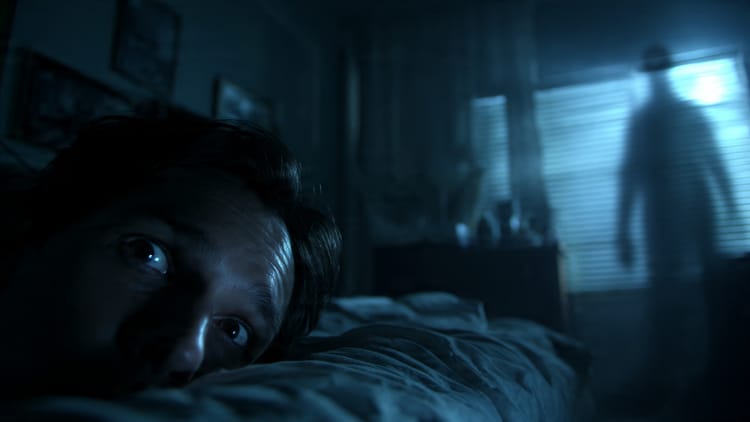
WHY IT FELT POSSESSED
If you’ve ever had your phone keyboard switch languages without warning, you know a tiny version of what this felt like.
You type what you mean. The screen fills with something else.
Now imagine that happening to your actual voice, in front of your boss, your family, a bored triage nurse, with no way to switch keyboards back.
It’s easy, from the outside, to label that “nonsense speech.” From the inside, it feels like being possessed by your own code.
He told me later, once we had gotten a few real words out of him with effort:
“It’s like there’s a second voice in there, hijacking the last second before the sound comes out. The numbers don’t even mean anything to me. They just… arrive.”
The human brain is a pattern making machine. When family hears repeated numbers, they look for hidden messages, lotto tickets, dates. When the person speaking them feels no meaning, only sabotage, the eeriness spikes.
The explanation is colder and less cinematic.
A damaged language network was falling back on a still intact, neighboring numeric system. The “voice that spoke math” was his own speech apparatus taking the path of least resistance around a lesion.
WHAT WE COULD DO
We treated the stroke.
Antiplatelet therapy, blood pressure control, hunting down risk factors he’d shoved into the “later” folder for a decade. Cardiac monitoring to make sure this wasn’t the first whisper of something in his heart. Standard, unsexy things that never trend on social media but decide who gets to keep talking.
We quieted the irritability.
Anti seizure medication at low dose, not because he was collapsing or convulsing, but because the EEG suggested that the injured cortex was too excitable. Calming that hyperactivity can sometimes reduce paroxysmal language glitches.
We brought in speech therapy.
Not the kind with flashcards and sing song kids’ songs, but adult neurorehab that specifically drills naming, sentence construction, repetition, and, in his case, strategies to drag output away from numbers when he felt them coming.
He learned tricks.
Tapping out syllables with his fingers. Singing phrases instead of speaking them, recruiting music networks that often sit a little aside from damaged language zones. Writing a word first, then reading it aloud, using the visual route as scaffolding.
“I’m going to the store,” he’d write. Then say it, eyes on the ink, catching himself when “thirty four” tried to elbow its way in.
RECOVERY, BUT NOT RESET
Brains heal, but not like movies.
In the following months, his speech improved. First, fewer numbers. Then numbers only when he was tired, stressed, or pushed too fast. By summer, most people on a quick phone call wouldn’t have noticed anything wrong.
He did.
On bad days, when meetings stacked and the news cycle chewed on another crisis, he felt the edge of it.
“I can feel the math trying to get out,” he said in one follow up, half joking, half serious. “Like there’s this ghost number track running under my real sentence, waiting for a chance.”
He’d learned to pause, breathe, and give the real word a second longer to emerge. He’d learned which situations made him more vulnerable: late nights, noisy rooms, speaking in front of groups, arguments.
The mystique of the numbers faded.
His daughter stopped checking them against angel number lists. His mother stopped whispering about tongues and spirits. The crypto neighbor moved on to a different conspiracy. The only place the story stayed sharp was in his own memory and in the few lines in his chart where we wrote, in dry language, what he lived as a horror glitch:
“Expressive aphasia with predominant numeric output.”
The voice that spoke math never belonged to anything outside him it was the sound of a small, damaged strip of cortex rerouting his words through the only channel it had left fully open.
Soren Whitlock